Find a Proper Setup to Trade
When to trade + a setup

Trading an Observation
A buddy of mine recently asked how he could find setups to trade. He wanted to know: how do I formulate a trading setup that actually holds water?
Most traders spend their time staring at chart patterns, lost in the noise—staring at a tree without ever stepping back to see the forest. Often, they see something they would like to trade but don’t take the plunge. Where does the confidence come from? How do I know if a setup is valid and worth the risk?
Today, we will explore this by looking at a live example: an observable phenomenon currently occurring in Bitcoin.
The US-EU Volume Engine
In this post, I’m sharing:
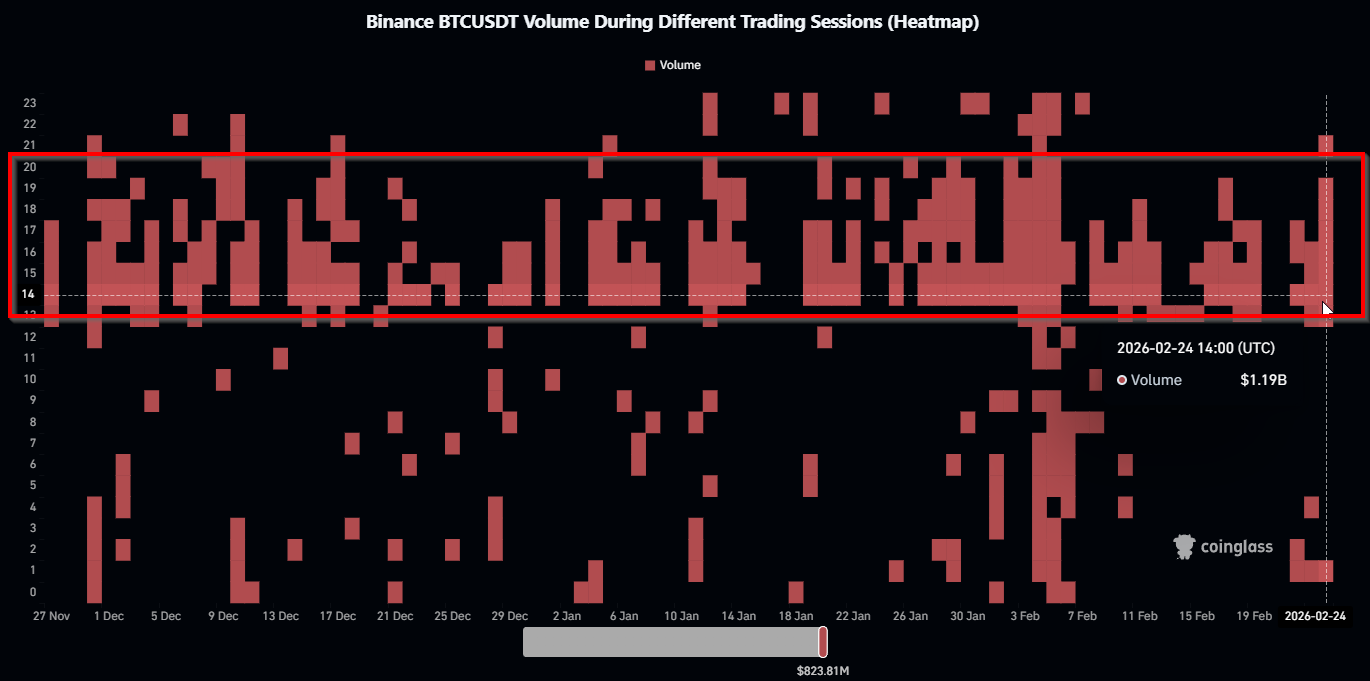
The 14:00–20:00 UTC Window: Why the majority of BTCUSDT volume and liquidations cluster during this specific time period (US-EU overlap).
The Child Order Effect: How large traders fill positions over time via many smaller orders, causing a trend to persist in one direction for the entire trading day.
A Tradable Observation.
When to Trade?
Most traders fail because they treat every hour of the day the same. They enter positions when the elephant is sidelined, wondering why price action feels random or stagnant. To find edge, I like to start by identifying when the action is likely to start a trend. And lucky for us when an elephant steps in a pool, he makes wakes!
Look at the following charts from CoinGlass and notice the clusters of volume from 14:00-20:00 UTC.
The same time period emerges when we observe liquidation clusters (14:00-20:00 UTC).
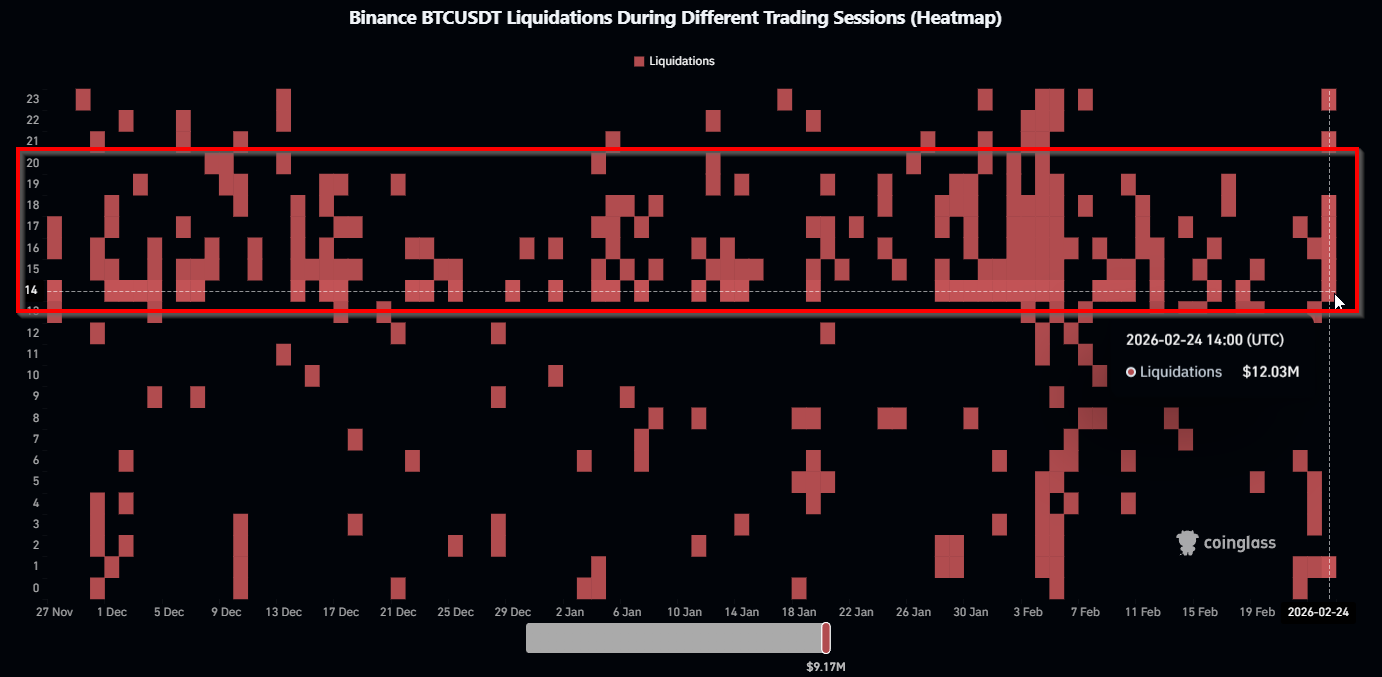
14:00-20:00 UTC looks like a fruitful time period to operate in!
Side note on paying attention and thinking for yourself
On CoinGlass, time zones are bucketed in 8hr increments:
Asia: 00:00-08:00 UTC
EU: 08:00-16:00 UTC
US: 16:00-24:00 UTC
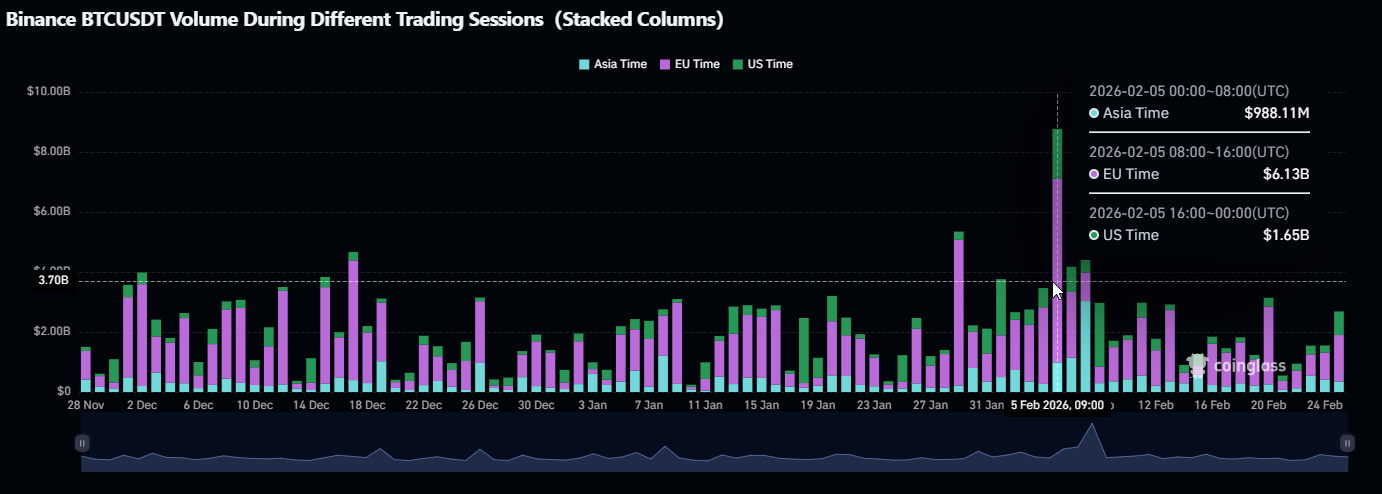
Note that, from the above screenshot take at face-value, I would believe London trading session is the highest volume; therefore best time to take new positions and exit existing.
This is not true, instead the higher volume is due to the US/EU trading session overlap; 2pm London (UTC) is, 9am New York (UTC-5). US Market open is the highest traded volume period on any given day.
Yeah but how to increase my edge with this understanding of when the most activity happens in the market?
Day Trading:
Now that I have a time of day to trade, I’d like to examine the market and see if any phenomena happen during this window of time.
I remember from my reading about markets, a well documented phenomenon that orders of one direction tend to persist for that same trading day.
Why is order flow so persistent?
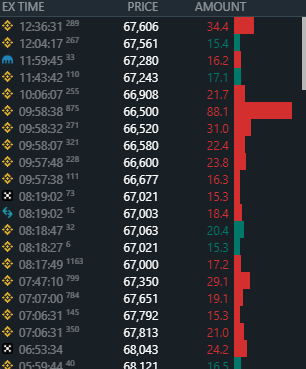
TL;DR - large investors don’t send one giant order, they fill the desired amount over time via many smaller “child” orders. Those child orders all have the same direction.
Putting it all Together
So now I know the high volume time of day and know that order flow is persistent in it’s direction; I can now look at the chart and identify a phenomenon.
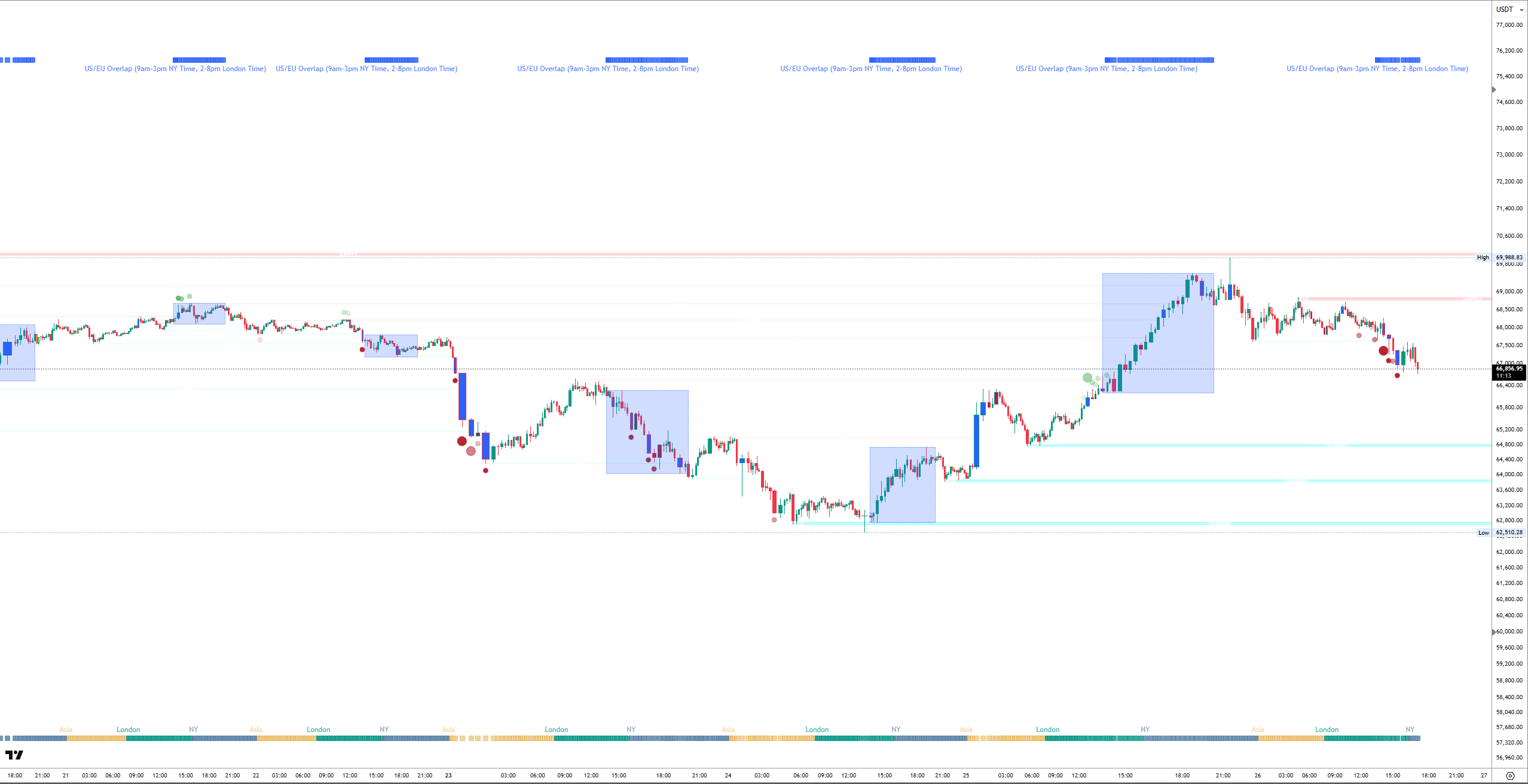
Q: Which direction is price trending from candle 14:00 to candle 14:30 UTC on the 15min chart?
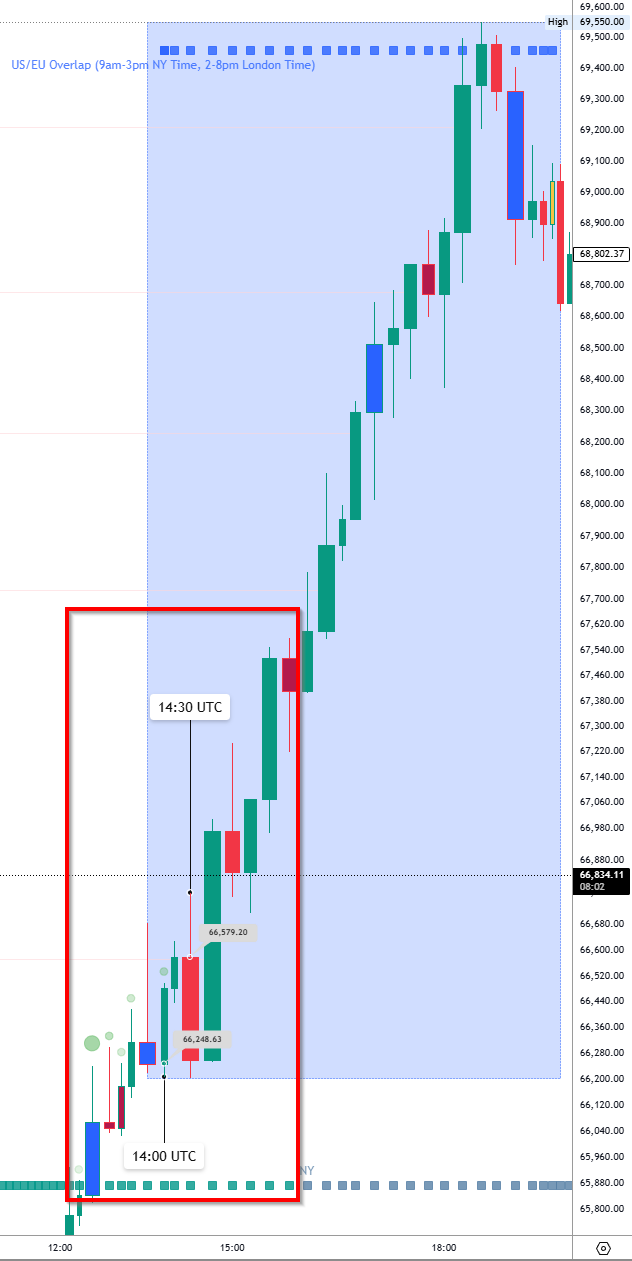
I see a trend direction in the first few 30min candles!
So I have a high probability chance that trend continues during our defined window (14:00-20:00 UTC)
(There’s more I did behind-the-scenes in testing this setup, but you get the idea)
This is an example we found a phenomenon currently true in Bitcoin.
I only need a few of these setups at any given time to make a career. The edge will last for a period of time, once it’s gone, I move on to another strategy. I am always probing the market and keeping an eye on not where the ball is but where the ball is headed.
Forecasting. Maybe I do a Stack on that soon…
Till next time
GL & GG’s!
- Toshi, your friendly neighborhood man posing as a cat who definitely did not copy CL cus i was meowing years before he was even born.
Cheers
The “Don’t Blow Up Your Account” Disclaimer
Listen, I’m a man posing as a cat on the internet, not your financial advisor. While the US-EU Volume Engine is a real phenomenon currently in Bitcoin , this post is for educational and entertainment purposes only. Trading is high-risk, and the market has a funny way of humoring an “edge” right until you put your life savings on it. Past performance is not a crystal ball-regimes change, and elephants sometimes step in different pools. Do your own homework, manage your risk, and remember: GL & GG’s, but trade at your own peril.